Enable policy-making to Connect the Unconnected.
I’m being a bit sparse with my blogpost in this space. I want to be better at it, but life sometimes gets too interesting (having a toddler) to sit down and write on a personal capacity.
Nevertheless, this subject sparked a willingness to write about it. I wanted to share about my latest experience learning and applying Human-Centred Design thinking.
Some background
Most of my research about the subject happened at:
I also asked some basics to ChatGPT, but nothing revealing sprung out of its responses.
I found the toolkit below particularly useful when we designed some of the activities detailed below:
I encourage the reader to follow the links above if you want to know more about the subject of HCD in general. Good reads.
Intro
The main reason why we are using the HCD frameworks, is to develop a tool for policymakers that allows them to find timely, accurate and useful information to develop enabling policies to connect the unconnected around the world.
From my own analysis and work in the field of connectivity, there’s already a TON of useful information out there to achieve this goal. But policymaking, particularly when it relates to technology and telecommunications is not always a straight path. History and traditions in the field really weight in. Thinking innovatively, outside of the typical regulatory framework is not easy. I’m committed to deliver a tool that makes it so. Easier
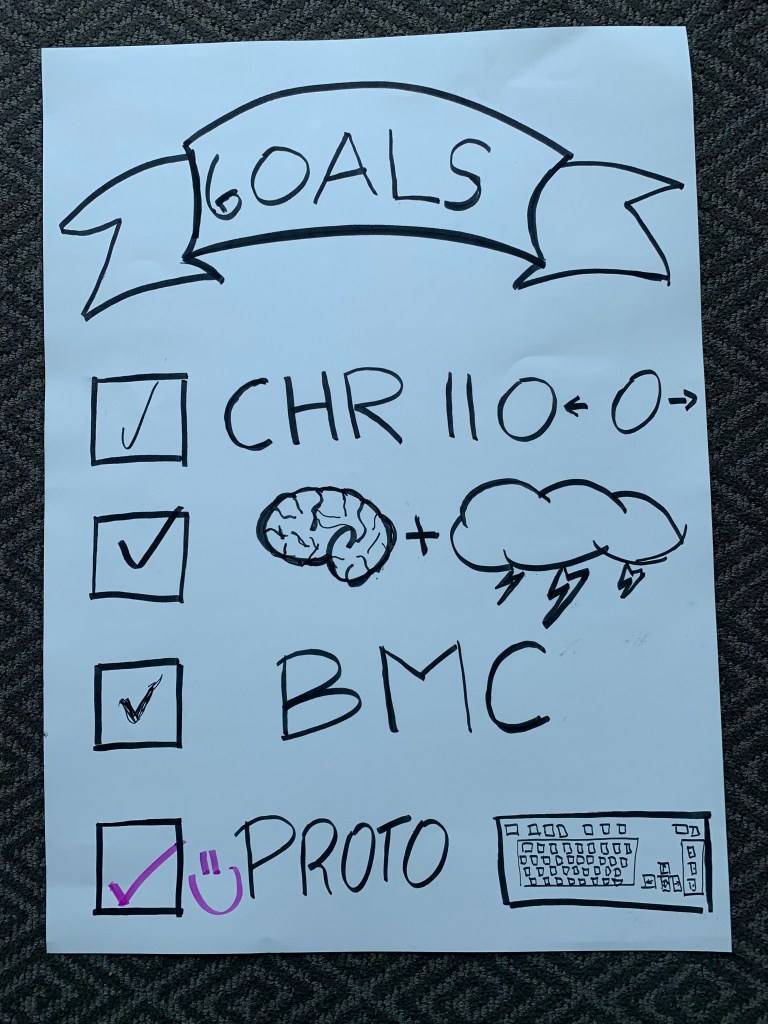
The workshop we designed was structured in three key activities: brainstorming, a business model canvas, and prototyping. The idea was to get people in the grove with a lightweight exercise of chatting and discussing. Then get some of their business acumen out in the open, and finally get them to play a bit with visual ideas and colours.
All activities were also focused on three specific areas of Telecommunication regulation: Licensing frameworks, Spectrum Management and Financing mechanisms
A relevant note before we start: Myself and colleagues were able to do this exercise part of my role at the Internet Society, allowing us to access a great group of policymakers during the last InterAmerican Telecommunications Commission (CITEL) 44th. PCC I meeting, held last May in Panama. I’m very aware that not all readers/designers will be able to access those venues to test some of these ideas. Regardless, I hope you find my experience useful.
The whole session was under Chatham House Rule . Therefore, you’ll not get any specifics in this post. Just some of my views on the process.
Let’s dive into it, then.
Kicking things off with Brainstorming
The start was much stronger than I thought. Policymakers, particularly in these types of meetings, are tide up in formal procedures. So, when we asked them to write the answers to some questions we pose to them, put it in post-its, and place them around different places in the room, I was very pleasantly surprise with the level of engagement. Not only all the participants were able to write answers to most of the questions we asked, but they did so with a level of dedication and interest that was inspiring.
This activity was designed to foster a free flow of ideas, allowing participants to voice their thoughts without fear of judgment.
Ideas did flowed freely, and for each of the questions we prompted, we received very interesting insight. Some we were not expecting.
Success! Strong start of the session.
Visualizing Ideas with the Business Model Canvas
Next, we invited policymakers to the Business Model Canvas (BMC) activity. This is a strategic management tool that allows for the visualization of key components of a business model. In this context, the BMC was adapted to fit our policy work related to connecting the unconnected, within the telecom regulatory areas mentioned above
This activity was not as straightforward as the previous one. We had a great first session with lots of ideas, now we needed to map those out. Participants started to do exactly that, categorizing ideas into segments such as value propositions, stakeholders, resources, and channels.
But ideas from the brainstorm were very general, and about the problem itself, connecting the unconnected. For this activity we were looking for a business model about a specific tool to achieve the goal of connecting the unconnected. And that was not clear for all. Pair this up with a very restricted schedule (we had only 25 minutes to do this activity) and the outcomes were not as strong.
Lesson learned. Use a BMC with plenty of time to address questions, and if necessary, make the introductions to the activity very explicit. Even if you think you are overdoing it. Repeat, clarify and repeat again what you would like to take out of the activity.
Nevertheless, I have to say the engagement was again of the charts! People were keen to make the BMC accurate and useful. The cohort of policymakers was just a delight.
Getting creative with Prototyping
The final activity of the session was prototyping. As mentioned earlier, the BMC took more time than expected, we were already late in our schedule, it was almost 7pm, and the AV team had to go home. We didn’t have the time we anticipated for this activity.
Here, we gave small groups of participants, colour pens and a big sheet. Then, we asked them to draw, or simply visualise what would be the very best, utopian tool to make sure they could design policies to enable connecting the unconnected around the world. This hands-on approach was intended to be the culmination of all the ideas discussed during brainstorming and the BMC, put into paper. Participants discussed, draw, laughed a bit and then presented to the rest of the group.
Here we had some really clever ideas, others not as strong. Again, lack of time and tiredness definitely played a role here. In any case, we had 7 groups of people that stayed and engaged meaningfully with the activity.
Another lesson learned. This is another activity that requires time. When building prototypes, the proposed solutions and their potential impact, need to have iterative instances. Trial and error. Continuous refinement. This was not ultimately possible, but this is an activity I would try again.
Some final reflections
I believe that all in all, the session was a success. It provided a fresh, engaging approach to policymaking that was both collaborative and innovative. We had the privilege to engage with experienced stakeholders, in this case policymakers, in a very traditional environment, where any of theses tools were not previously used. I think the participants left the session with a sense of enthusiasm, and really looking forward to see what we can do with the information we gathered.
We need to bring more HCD principles into policymaking processes. Traditional approaches often lack the flexibility and inclusivity needed to address complex, multistakeholder issues. Although connectivity, networking and telecommunications seem as a very technical topic, we need to bring empathy, creativity, and collaboration to these processes, in which Humans are at the end of the line. I hope this approaches will lead to more robust and effective policies.
I will apply these again.
 Tech Tide Talk